coming next!
By joining our mailing list, calendar events will automatically appear and be updated on your calendar - no need to add them manually.
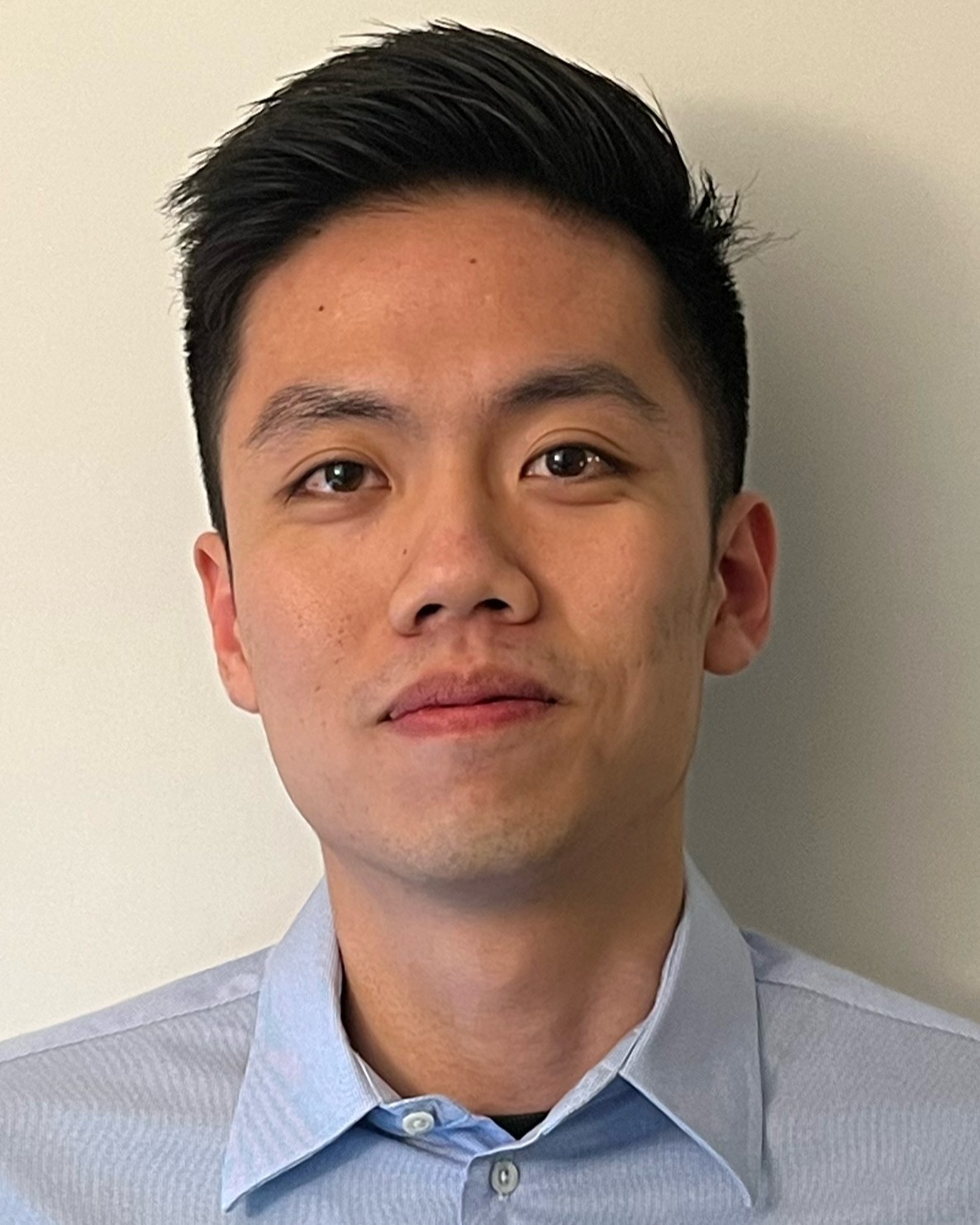
Bo Lin
Postdoc at University of Toronto & MIT , incoming Assistant Professor at National University of Singapore
March 2, 2026 at 4:00 PM PT -> my local time Add to Calendar
Location: Rm 786, Davis Hall, Berkeley Watch Live on Zoom / YouTube
Analytics for Better Urban Cycling poster
Abstract
Motivated by a cycling infrastructure planning application, we present a machine learning approach to solving bilevel programs with a large number of independent followers, which as a special case includes two-stage stochastic programming. We propose an optimization model that explicitly considers a sampled subset of followers and exploits a machine learning model to estimate the objective values of unsampled followers. Unlike existing approaches, we embed machine learning model training into the optimization problem, which allows us to employ follower features that cannot be represented using leader decisions. We prove bounds on the optimality gap of the generated leader decision as measured by the original objective that considers the full follower set. We develop follower sampling algorithms to tighten the bounds and a representation learning approach to learn follower features, which are used as inputs to our machine learning model. Through numerical studies, we show that our approach generates leader decisions of higher quality compared to baselines. Finally, we perform a real-world case study in Toronto, Canada, where we solve a cycling network design problem with over one million followers. Compared to the current practice, our approach improves a transportation metric by 19.2% and can lead to a potential cost saving of $18M.
Speaker Bio
Bo Lin is a joint Postdoc Fellow at University of Toronto and MIT. He is also an incoming assistant professor at the National University of Singapore. His research focuses on AI for sustainable cities, developing machine learning and optimization techniques to evaluate, design, and help people interact with urban systems. Motivated by practical challenges encountered in real-world deployment, the other line of his research focuses on integrating machine learning and optimization, aiming to improve the efficiency, effectiveness, and applicability of data-driven decision-making tools. His research has been recognized by several awards, including INFORMS George B. Dantzig Dissertation award, INFORMS Daniel H. Wagner Prize, INFORMS TSL Best Student Paper Award, CORS Practice Prize, among many others. In 2023, he interned at Uber as an Applied Scientist.
Other Upcoming Seminars
Jiayu Kamessi Zhao Postdoctoral Researcher at Waymo , incoming Assistant Professor at Stanford University
Title: Two-sided Flexibility in Platforms
Willson McNeil Postdoctoral Fellow at Stanford University
Topic: Heavy-duty Truck Electrification
Tianyuan Huang Software Engineer at Waymo
Title: Fine-grained, Scalable and Dynamic Atlas of Urban Change via AI
Jae-Won Chung PhD student at University of Michigan
Title: Energy as a first class computing resource in ML systems
Jerry Anunrojwong Postdoctoral Fellow at University of Washington , incoming Assistant Professor at Yale University
Topic: Energy Market Design and Analysis
Yifan Liu PhD student at Georgia Institute of Technology
Title: Why EV Charging is So Unreliable? The Effects of Competition on Supplementary Service Quality